The Magic of the Circle: How Tracing Shapes Builds Foundational Skills
In the world of early childhood development, mastering basic forms is a crucial stepping stone. Among these, the circle holds a special place—a simple, continuous line that is one of the first shapes a child recognizes and attempts to recreate. Practice Tracing for Kids Circle Shape worksheets are more than just drawing exercises; they are structured tools designed to transform this natural curiosity into tangible skill development. These resources offer a guided pathway for young learners to hone their fine motor control, spatial awareness, and pre-writing abilities through the focused repetition of tracing this fundamental shape.
Why Start with the Circle?
The circle is often the gateway to shape recognition. Its smooth, continuous curve is easier for a young hand to approximate than shapes with sharp angles and straight lines. Engaging with Practice Tracing for Kids Circle Shape activities provides a low-pressure introduction to controlled pencil or crayon movement. The act of following a clear, predefined line teaches hand-eye coordination—the brain learns to guide the hand based on visual input. This repetitive motion strengthens the small muscles in the fingers and wrist, which is essential for future tasks like holding a pencil correctly, buttoning a coat, or using scissors.
Beyond motor skills, tracing circles builds cognitive foundations. It reinforces the concept of boundaries and closed forms, a precursor to understanding letters and numbers. Successfully completing a tracing worksheet also offers an early sense of accomplishment, boosting confidence and fostering a positive attitude towards learning and structured activities.
Features of High-Quality Tracing Resources
Effective Practice Tracing for Kids Circle Shape materials are crafted with specific characteristics to maximize their educational value. Key features include:
- High-Quality Crystal Clear Lines: The tracing outline must be distinct and smooth, providing an unambiguous path for the child to follow without visual confusion.
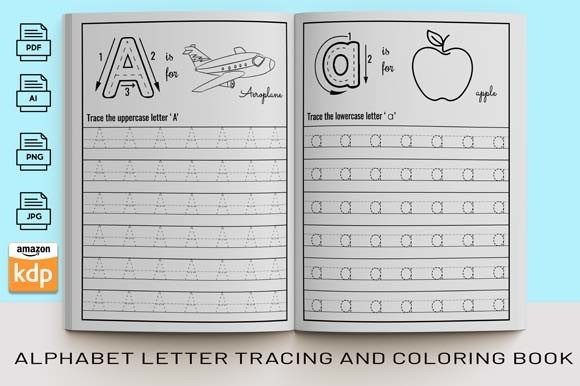
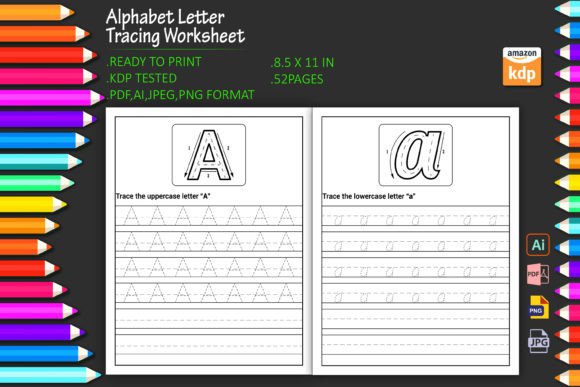
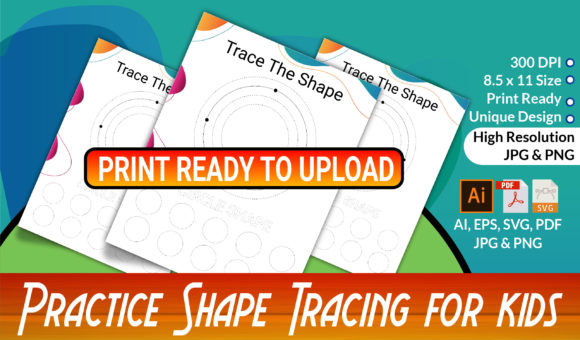
- Print-Ready Formats: Availability in standard dimensions like 8.5 x 11 inches and high-resolution (300 DPI) files ensures the worksheets remain crisp and professional when printed at home or in a classroom setting.
- Multiple File Formats: A comprehensive package including PDF, JPG, PNG, SVG, EPS, and Ai files offers immense flexibility. Educators and creators can print directly from the PDF, incorporate the image into digital platforms, or even customize the design using the vector files for tailored projects.
These technical specifications translate directly into a better user experience. A child struggles less with a fuzzy, poorly printed line. A teacher saves time with a ready-to-use, professionally formatted sheet. A designer or business owner can adapt the core asset for various products or supplemental materials.
Real-World Applications and Beneficiaries
The utility of Practice Tracing for Kids Circle Shape worksheets extends across numerous environments and supports a wide range of users.
Primary Educational Settings
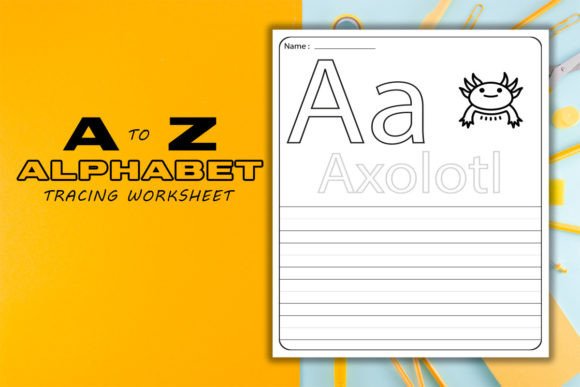
In preschool and kindergarten, these worksheets are a staple in learning centers. They can be used as individual desk work, part of a shape-themed week, or as a calm, focused activity to develop patience and concentration. Teachers can integrate them seamlessly into lesson plans focusing on geometry, art, or pre-literacy skills.
Supporting Home Learning
For parents and homeschool educators, these resources provide structured, skill-building activities without requiring extensive preparation. They are perfect for rainy-day activities, supplementary practice, or as part of a daily learning routine. The clear objectives and simple output make it easy for caregivers to guide and celebrate a child’s progress.
A Tool for Creators and Professionals
The bundled, multi-format nature of quality Practice Tracing for Kids Circle Shape packages is particularly valuable for designers, content creators, and entrepreneurs. The vector files (Ai, EPS, SVG) allow for effortless scaling, color changes, or integration into larger workbook projects for platforms like KDP (Kindle Direct Publishing). The high-resolution raster files (PNG, JPG) are ready for use in digital apps, online learning modules, or promotional graphics. This versatility makes it a foundational asset for building a suite of educational products.
Evaluating Suitability and Practical Considerations
When considering these tracing worksheets for a specific need, it's helpful to evaluate a few key aspects.
First, assess the developmental stage of the child. While generally aimed at preschool and kindergarten ages, they can also benefit older children who need extra support with fine motor skills or visual-motor integration. The activity should be challenging enough to engage but not so difficult that it causes frustration.
Second, consider the context of use. For simple, repeated printing and direct use, the PDF and high-resolution JPG are likely sufficient. For any project requiring customization, branding, or adaptation—such as creating a unique themed workbook or incorporating the shape into interactive software—the inclusion of vector files (SVG, Ai) is essential.
A potential limitation to acknowledge is that tracing is a guided activity. It builds specific skills but should be part of a balanced approach that also includes free drawing, play-based manipulation of objects (like round blocks), and other forms of creative expression. Tracing prepares the hand and mind, but freeform creation allows for the application of those skills.
Integrating Tracing into a Holistic Learning Approach
To maximize benefit, Practice Tracing for Kids Circle Shape worksheets should be used as one component of a broader learning experience. For example, after tracing several circles on paper, a child could be encouraged to find circular objects around the house, draw circles in sand or shaving cream for tactile feedback, or use circular stamps. This connects the pencil-and-paper skill to the real, three-dimensional world, deepening understanding. The worksheet provides the structured repetition; the complementary activities provide context and creative exploration.
The Enduring Value of a Simple Shape
Ultimately, resources focused on Practice Tracing for Kids Circle Shape exemplify how targeted, well-designed tools can support foundational development. They translate an abstract educational goal—improving fine motor control—into a concrete, achievable task for a young child. Their value lies not just in the immediate activity, but in the competencies they build for the future: the dexterity needed for writing, the visual precision required for reading, and the confidence gained from mastering a challenge.
Whether you are a teacher building a classroom curriculum, a parent supporting your child’s early growth, or a creator developing educational products, understanding the purpose and potential of these simple tracing exercises allows you to leverage them effectively. By starting with the circle, we help children draw the first lines of their learning journey.