Strategically Building Math Proficiency with Addition Subtraction Fractions Worksheets
For educators, homeschooling parents, and content creators targeting the educational market, the strategic deployment of focused practice materials is a cornerstone of effective teaching. An Addition Subtraction Fractions Worksheet is not merely a collection of arithmetic problems; it is a targeted tool designed to scaffold learning, reinforce understanding, and assess mastery of one of mathematics' most foundational and often challenging concepts. When utilized with intention, such worksheets become a critical component in a larger strategy for building lasting student competency.
The Strategic Utility of Fraction Worksheets in Educational Planning
The deliberate use of an Addition Subtraction Fractions Worksheet serves multiple strategic goals beyond simple practice. For the entrepreneur creating educational products or the educator managing a classroom, these materials function as both a diagnostic and a developmental instrument. They allow for the identification of specific student weaknesses—whether in finding common denominators, simplifying results, or understanding mixed numbers—and provide a structured pathway for remediation. This moves beyond random practice to a goal-oriented approach where each exercise is a step towards a defined outcome: genuine mathematical fluency.
From a planning perspective, a well-constructed workbook, such as one offering a large 8.5 x 11 format with 30 exercises per page, provides a scalable framework. It ensures consistency and comprehensiveness, covering the spectrum from simple fraction addition to more complex problems involving subtraction with unlike denominators. This structure saves valuable time for professionals who need reliable, ready-to-use resources, allowing them to focus their energy on instruction, explanation, and personalized support rather than material creation.
Intentional Use: Positioning Worksheets Within a Learning Strategy
The key to leveraging an Addition Subtraction Fractions Worksheet effectively is to integrate it thoughtfully into a broader pedagogical or product strategy. Using it randomly or as mere filler can lead to student frustration and minimal skill transfer. Instead, consider its role in a sequenced plan. It might follow initial conceptual lessons using visual models, serve as formative assessment before a unit test, or provide the repetitive practice necessary to build automaticity for learners struggling with procedural steps.
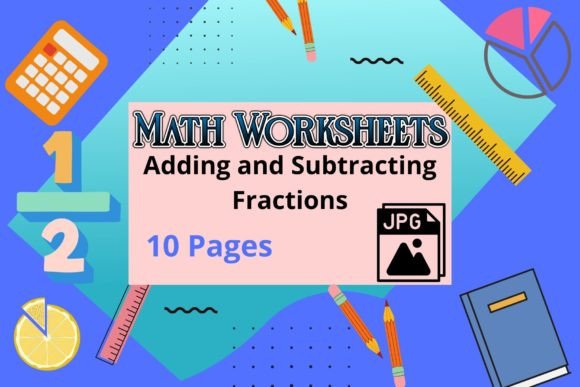
For the creator uploading such workbooks to platforms like KDP, understanding this intentional use is vital for branding and customer satisfaction. Marketing a product as a "Fractions Math Workbook that helps students learn how to understand and solve problems" speaks directly to a goal-oriented buyer—a parent or teacher seeking a solution to a specific learning gap. The product’s features, like the 10-page length and JPG file format for easy interior creation, are not just specifications; they are answers to the practical challenges your audience faces.
Practical Applications and Operational Considerations
In realistic use cases, these worksheets support operations and enhance the learner's experience. A tutor might use a single page from a workbook as a focused 30-minute session to tackle a student’s persistent error pattern. A classroom teacher could employ different pages for differentiated instruction, providing more basic problems to one group and challenging ones to another, all from the same cohesive resource. The large, clear format is an operational decision that improves usability, reducing visual clutter and allowing for neat work presentation, which in itself supports clear thinking and error checking.
Before relying solely on any worksheet, however, strategic practitioners consider context. The workbook is a tool for practice and application, not for initial concept discovery. Its effectiveness is multiplied when paired with quality instruction, manipulatives, or digital tools that build conceptual understanding first. The risk lies in using an Addition Subtraction Fractions Worksheet as a substitute for teaching, which can lead to students memorizing steps without understanding the underlying principles of fraction operations. This hollow proficiency often collapses when faced with unfamiliar problems or applied contexts.
Guiding Decision-Making for Creators and Educators
When deciding to create or utilize such a resource, focus on long-term results. Ask strategic questions: What specific learning objectives does each page address? Does the progression of exercises build logically in complexity? Does the format support independent work or require guidance? For the KDP creator designing their own interior, these questions translate directly to product quality. A well-planned workbook with a thoughtful progression from addition to subtraction, or from like to unlike denominators, provides a coherent learning journey that customers will trust and reuse.
Planning tips for effective implementation include sequencing practice sessions, incorporating immediate feedback mechanisms (like answer keys or peer checking), and using the worksheet outcomes to inform next steps. The data from a completed Addition Subtraction Fractions Worksheet—the types of errors made, the time taken, the areas of confidence—are invaluable for strategic educational decision-making. They tell you what the learner needs next, enabling a dynamic and responsive teaching approach.
Achieving Better Results Through Structured Practice
The ultimate goal for any professional using these resources is to move learners from uncertainty to mastery. The structured, repeated exposure provided by a dedicated workbook creates the cognitive space for this transition. Over time, through intentional practice, the mechanics of adding and subtracting fractions become internalized, freeing the learner’s mental resources to tackle more advanced mathematical problems where fractions are a component, not the barrier.
This outcome has direct implications for customer experience and brand reputation. An educator who uses a workbook that reliably produces student improvement becomes a repeat customer. A parent who sees their child finally grasp fractions thanks to clear, abundant practice will seek out similar products. The value is demonstrated in the results, grounding your product or teaching method in tangible success.
Navigating Potential Risks and Ensuring Strategic Alignment
While powerful, an Addition Subtraction Fractions Worksheet carries the risk of misuse. The primary danger is over-reliance, where practice displaces pedagogy. Another is mismatched difficulty, where a learner is given problems far beyond their current understanding, leading to disengagement. To mitigate these risks, align the tool with clear goals. Use it to reinforce, not to introduce. Select or design pages that match the learner’s verified readiness level, perhaps starting with a review of equivalent fractions before jumping into subtraction.
For the entrepreneur, this means your product description and internal design should guide proper use. Including brief notes for the instructor or parent on how to best deploy each section can transform a simple workbook into a strategic educational partner. This layer of guidance enhances the product’s perceived authority and usefulness, directly supporting Google’s E-E-A-T principles by demonstrating Experience and Expertise in the content’s application.
In conclusion, the strategic value of an Addition Subtraction Fractions Worksheet lies entirely in its intentional application. It is a component of a system aimed at producing lasting mathematical understanding. Whether you are an educator planning a unit, a tutor addressing a skill gap, or a creator building a valuable resource for the KDP marketplace, approaching these tools with a focus on goals, sequenced planning, and realistic outcomes transforms simple exercises into a powerful engine for learning and growth. The thoughtful integration of such structured practice materials is a decision that pays dividends in student confidence, operational efficiency, and long-term educational success.